
Dupuytren's Disease
What is Dupuytren's Disease?
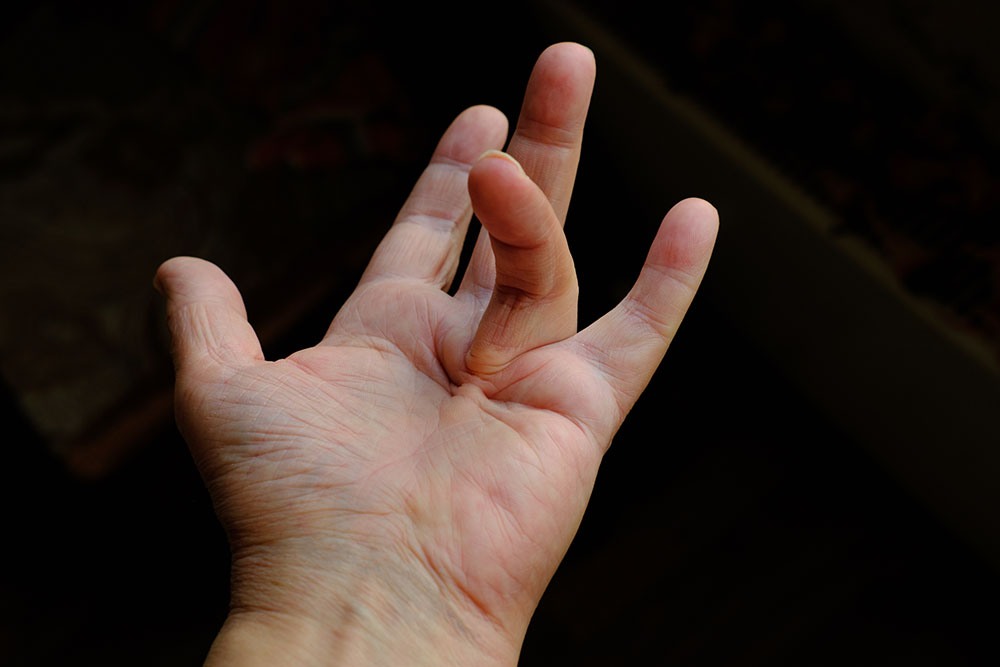
Dupuytren’s Disease is a condition that affects the connective tissue beneath the skin of the palm and fingers. It causes the tissue to thicken and form nodules and cords, which can gradually pull the fingers into a bent position, making them difficult to straighten. While the exact cause of Dupuytren's is not fully understood, it is believed to have a genetic component and is more common in individuals of Northern European descent. The condition usually develops slowly and can affect one or both hands, typically starting with the little finger and ring finger.
Though Dupuytren’s is not painful in its early stages, it can severely limit hand mobility, impacting daily activities such as gripping or shaking hands. While the disease tends to progress over time, treatments, including surgery, can help manage symptoms and improve hand function.
What does surgery involve?
Surgery for Dupuytren’s Disease is usually recommended when the fingers become severely bent and affect daily activities. The goal of surgery is to remove or release the thickened tissue to restore hand function.
The procedure typically involves a procedure called a fasciectomy, where parts of the affected tissue are removed. After the surgery, physical therapy may be needed to help regain strength and movement in the hand.
Surgery is usually done under general anesthesia, meaning you’ll be asleep for the surgery, and you can go home the same day. Recovery times vary, but most people can return to normal activities within a few weeks, though full recovery may take several months.
What is the recovery period?
After a fasciectomy for Dupuytren’s Disease, recovery can take several months, but most people are able to return to light activities within 2-4 weeks. The full recovery process can vary depending on the extent of the surgery and individual healing rates.
In the first few weeks, you’ll need to keep the hand elevated to reduce swelling and follow your surgeon’s guidelines for wound care. You may be advised to wear a splint to protect your hand and help it heal properly.
Hand therapy is often recommended to help restore strength, flexibility, and mobility to your fingers. Therapy usually begins a few weeks after surgery and may continue for several months to ensure the best possible outcome.
While you can expect some discomfort and swelling during recovery, most people notice significant improvements in hand function after the healing process is complete.
What are the risks?
As with any surgery, a fasciectomy for Dupuytren’s Disease carries some risks, though serious complications are rare. Common risks include:
- Infection: While rare, infection can occur at the surgical site, leading to swelling, redness, or fever.
- Scarring: Some scarring is inevitable, and in some cases, the scars may be more noticeable or cause tightness in the skin.
- Nerve Damage: In rare cases, nerves near the surgical site can be injured, which could lead to numbness, tingling, or weakness in the hand.
- Recurrence: Dupuytren’s Disease may return after surgery, especially if the condition was severe before the procedure. In some cases, additional treatments or surgery may be needed.
- Stiffness or Loss of Motion: While surgery is meant to improve finger mobility, some people may experience stiffness or a limited range of motion after recovery.
It's important to discuss these risks with your surgeon, who can help you understand your specific situation and the steps taken to minimize these potential complications.
What are the costs?
The cost of a fasciectomy for Dupuytren’s Disease varies depending on the complexity of the surgery, severity of the disease, number of digits involved and whether this the first time the digit has been operated (primary) or not (secondary).
The cost for a fasciectomy typically ranges from NZD 8,000 to NZD 15,000. This includes the surgeon's fee, hospital charges, and anesthesia. Additional costs may be involved for hand therapy.
Many private health insurance plans may cover part or all of the cost, depending on your policy. It’s important to check with your insurance provider for more specific details regarding coverage for this procedure.
A personalised quote will be provided after your consultation with Dr Kwon.